More about yoga
Astanga 101
Some of the essentials of astanga yoga: the opening and closing mantras, the eight limbs, the yamas and niyamas plus some recommended reading, practice tips and other bits and pieces. We’ll add more as we go along.
We’re always around to chat about questions you may have. Please also feel free to borrow any books you’d like to read from the shala library.
Hamish Hendry
Astanga opening + closing mantras
Both the opening and closing mantra help tie us into the treasured history of yoga while helping us break free from being self-centred.
Opening mantra
आबाहुपुरुषाकारं शङ्खचक्रासिधारिणम् ।
सहस्रशिरसं श्वेतं प्रणमामि पतञ्जलिम् ॥
Oṃ
vande gurūnāṃ caraṇāravinde sandarśita-svātma-sukhāvabodhe |
niḥśreyase jāṅgalikāyamāne saṃsāra-hālāhala-moha-śāntyai ||
ābāhu-puruṣākāraṃ śaṅkha-cakrāsi-dhāriṇam |
sahasra-śirasaṃ śvetaṃ praṇamāmi patañjalim ||
I bow to the two lotus feet of the gurus,
Through which the understanding of the happiness in my own Soul has been revealed.
My ultimate refuge, acting like a snake doctor,
For the pacifying of the delusions caused by the poison of cyclic existence.
Who has the form of a human up to the arms,
Bearing a conch, a discus and a sword.
White, with a thousand heads,
I bow to Patañjali.
– translated by Zoë Slatoff
Closing mantra
ॐ
स्वस्ति प्रजाभ्यः परिपालयन्तां न्यायेन मार्गेण महीं महीशाः ।
गोब्राह्मणेभ्यः शुभमस्तु नित्यं लोकाः समस्ताः सुखिनो भवन्तु ॥
ॐ शान्तिः शान्तिः शान्तिः ।
Oṃ
svasti prajābhyaḥ paripālayantāṃ nyāyena mārgeṇa mahīṃ mahīśāḥ |
go-brāhmanebhyaḥ śubham astu nityaṃ lokāḥ samastāḥ sukhino bhavantu ||
Oṃ śāntiḥ śāntiḥ śāntiḥ |
May the rulers of the earth protect the well-being of the people,
With justice, by means of the right path.
May there always be good fortune for cows, Brahmins and all living beings,
May the inhabitants of all the worlds be full of happiness.
Oṃ Peace, Peace, Peace!
– translated by Zoë Slatoff
The eight limbs of yoga
The ‘eight limbs’ are a complete practice encompassing four practical outer limbs and four mental internal limbs. It is a reference to the yoga philosophy of Patanjali from about 2000 years ago.
The eight limbs
यम yama restraints
नियम niyama observances
आसन āsana posture
प्राणायाम prāṇāyāma breath/prana control
प्रत्याहार pratyāhāra sense withdrawal
धारणा dhāraṇā concentration
ध्यान dhyāna meditation
समाधि samādhi enlightenment
Yamas + niyamas
A lot can be said of the yamas and niyamas as they are the foundation of good yoga. We should aim towards them. They are eco-yoga, they help save our energy. They all stem from the first, ahimsa, non-violence. and lead to the last, Ishvara pranidhana. We should keep them in mind as much as possible. They should affect our lives and the choices we make. Patanjali also describes why we suffer, the misidentification of soul, purusha, with matter, prakriti. And that we suffer because we want permanence in an impermanent world. ‘All is suffering to the wise’ 2.15
From Hamish’s book, Yoga Dharma
Yamas
अहिंसा ahiṃsā non-violence
सत्य satya truthfulness
अस्तेय asteya non-stealing
ब्रह्मचर्य brahmacarya sexual control
अपरिग्रह aparigraha non-greed
Niyamas
शौच śauca
सन्तोष santoṣa
तपस् tapas
स्वाध्याय svādhyāya
ईश्वरप्रणिधान īśvara-praṇidhāna
Two essential yoga books
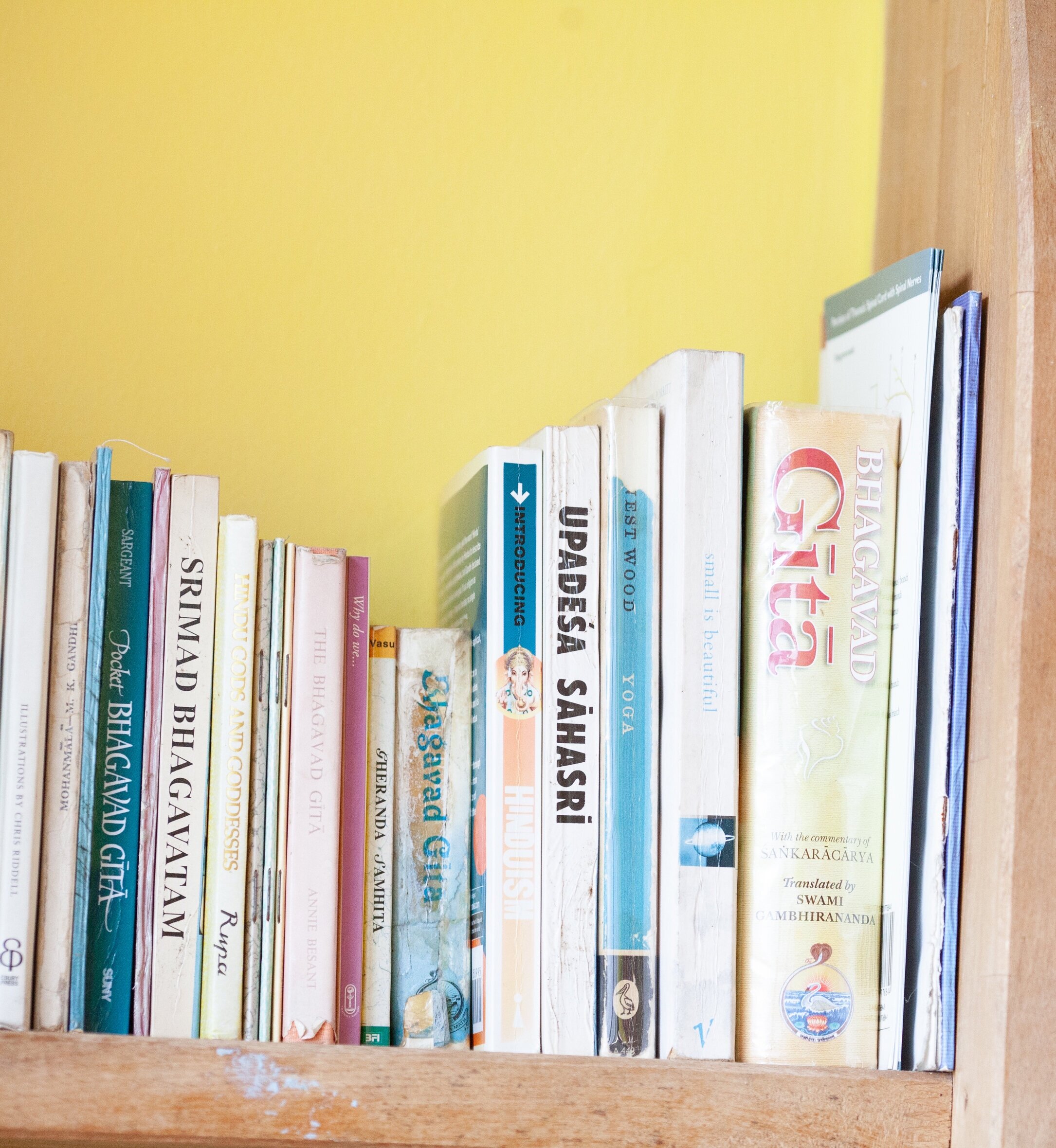
Yoga Sutras of Patanjali by Swami Satchidananda
This is a complete yoga sutras book in that it covers word for word translation, transliteration and Sanskrit. But, most importantly, it brings the yoga sutras into the everyday as a map to live a spiritually fulfilling life.
The Gita for Children by Roopa Pai
The Bhagavad Gita takes many readings to understand but Roopa Pai’s retelling makes it very accessible and relevant to modern life.
Some practice tips
1. Any yoga is better than no yoga
2. Start slowly gradually increasing your awareness
3. Listen to your breath and let that be your guide
4. What you learn on the mat try and use in everyday life
Monthly Gītā: April
At the beginning of each month one of our teachers chooses a sloka from the Bhagavad Gītā to discuss.
This month Hamish has chosen 9.26:
patraṃ puṣpam phalaṃ toyaṃ
prayacchati
tad ahaṃ
bhaktyupahṛtam
Bhagavad Gītā 9.26
Ganesh
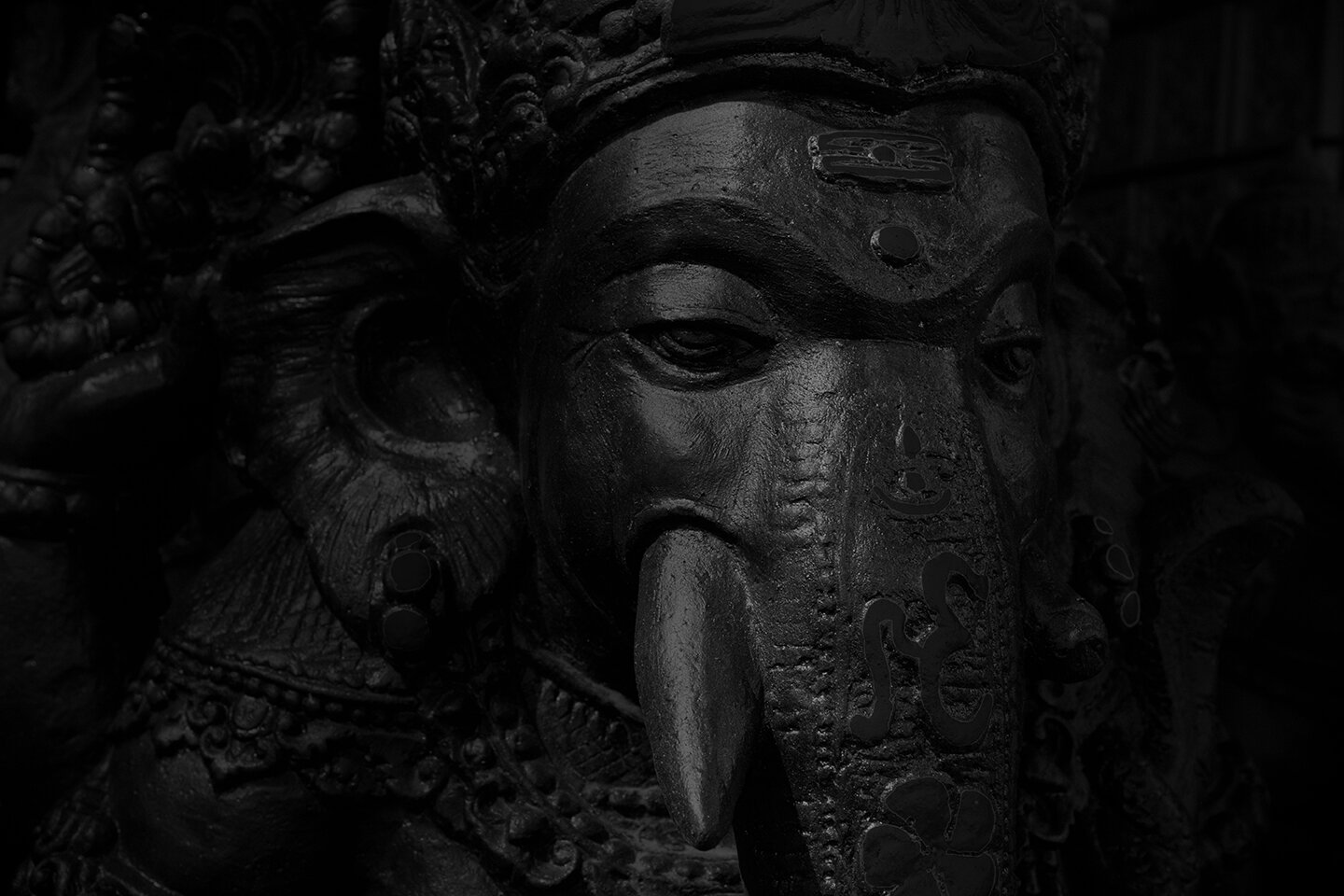
A poem by Alan Spence
I’m not an animal, I’m not a man,
I am a god – I Am since time began.
God of Beginnings, Guardian at the Gate,
I’m Lord of Thresholds, transcend time and fate.
What you see is the form that I assume.
Here I am, the elephant in the room –
proboscis, tusks, pot belly, flapping ears.
Light on my feet, I’ll dance away your fears.
Ganesha, Remover of Obstacles,
performer of everyday miracles.
Your children know me well, each avatar –
I’m Horton, Dumbo, Kala Nag, Babar.
But yes, those obstacles – who put them there?
Now, offer me your mantra, homage, prayer.
Aum Ganeshaya Nama – chant my name.
Aum Ganeshaya Nama – chant my name..
Some video practice tips
I made these videos during lockdown when the shala was shut in the hope that they’d be helpful while I couldn’t teach you in person.

aśāntasya kutaḥ sukham
Without peace where is happiness?
— Bhagavad Gītā 2.66
This simple quote from the Bhagavad Gita distils the teaching that Krishna gives to Arjuna that he needs to find peace in his mind to be truly happy. Arjuna is stuck in the middle of a battle, so finding mental peace is not always easy, for any of us.